



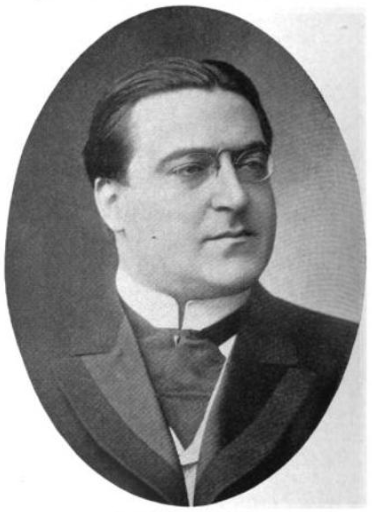
In December, Boston celebrates the annual Tree Lighting on Boston Common, a tradition with deep historical connections to Halifax, Nova Scotia – and, by extension, USS Constitution.
For more than 80 years, the city’s tree has been a gift of thanks from the Canadian city for Boston’s lifesaving response to Halifax’s darkest moment. On December 6, 1917, a munitions ship collided with another ship in Halifax Harbor, setting off history’s largest pre-nuclear explosion. The blast destroyed entire neighborhoods along the waterfront, set fires throughout the city, left nearly 2,000 dead and thousands more injured. The desperate call for help went out, and Boston responded immediately.
Before the day was over, Boston organizer A.C. Ratshesky was leading a train full of doctors, nurses, Red Cross relief workers, and supplies bound for Halifax. Ratshesky reported back to the Boston press about the desperate conditions facing Halifax residents in the wake of the blast. His logistical prowess, depth of connections in the Boston community, and familiarity with emergency needs were critical to the challenging response.
Seven years later, his reputation made Ratshesky the Navy’s obvious choice to help lead a nationwide fundraising campaign to save USS Constitution. Again, Ratshesky’s skills, connections, and understanding of what was needed proved key to the success of what would become known as the Pennies Campaign.
The Bostonian sent to help Halifax became the man sent to save “Old Ironsides.”
‘Cap’ Ratshesky
Abraham Captain Ratshesky, often known as “Cap,” was born in Boston in 1864 to Jewish immigrant parents who owned successful mercantile and real estate investment businesses. After dropping out of Boston Latin School at age 14, Ratshesky worked with his father. My his mid-20s he embarked on a political career, serving first on the Boston City Council and then on the Massachusetts State Senate.
After marrying Edith Shuman in 1894, Ratshesky left politics and started an investment bank with his brother, Israel. The U.S. Trust Company specialized in making loans available to ethnic and immigrant businesses that were normally shut out of the mainstream banking system.
Over the next 20 years, Ratshesky secured his place in Boston’s business community, re-engaged in politics, and developed a reputation as a philanthropist, organizer, and volunteer for a variety of organizations, including heading the metropolitan Red Cross. He was among the relief workers responding to major urban fires in Boston and Salem.
The Cry from Halifax
The news of the devastating explosion in Halifax first arrived in Boston at about 11 a.m., two hours after the blast. Massachusetts Governor Samuel McCall tried to telegram the mayor of Halifax offering help but got no response. He organized a meeting of the Massachusetts Public Safety Committee that afternoon, and the decision was made to equip a special train of medical staff, Red Cross workers, and supplies to travel to Halifax. McCall appointed Ratshesky to head what would become known as the Halifax Relief Expedition.
At 10 p.m. that night, only 11 hours after the first word had arrived, Ratshesky and his team departed Boston. On the train were 13 surgeons and doctors, 10 nurses, six Red Cross representatives, five newspaper reporters, and a baggage car full of medical supplies.
At stops along the way, they tried to contact Halifax by telegram but received no reply; instead, each station brought only more dire rumors about the disaster. At St. John, New Brunswick, they stocked up on more medical supplies and took on additional relief workers until every seat in the train was full.

“A Gruesome Start”
The devastation of the Halifax explosion was compounded by a blizzard that swept through the following day. Bitter cold and heavy snow buried rail lines and delayed the relief trains streaming toward the city. Ratshesky’s train arrived at the nearest working train station at 3 a.m. on December 8. At dawn, after meeting up with a representative of the Canadian Government Railways, they found a car and began making their way toward City Hall. In his later report to Governor McCall, Ratshesky recounted the trip:
“The conveyance that we took, we were informed, had been used day and night in carrying the wounded to hospitals, and the dead to the morgue. The young man driver had lost all the members of his family, consisting of his wife and four children. It was a gruesome start. Debris had not been re- moved from the streets, and after a great deal of difficulty we arrived, at about 9 o’clock, at City Hall, which is located in the center of the city. An awful sight presented itself, — buildings shattered on all sides; chaos apparent; no order existed.”
Medicine and Logistics
For the next week, Ratshesky worked with Halifax leaders to establish additional makeshift hospital facilities and coordinate the growing stream of relief workers and supplies pouring into the city from Canada and the United States by train and ship. His wire reports back to the Boston press encouraged donations, which piled up in Boston.
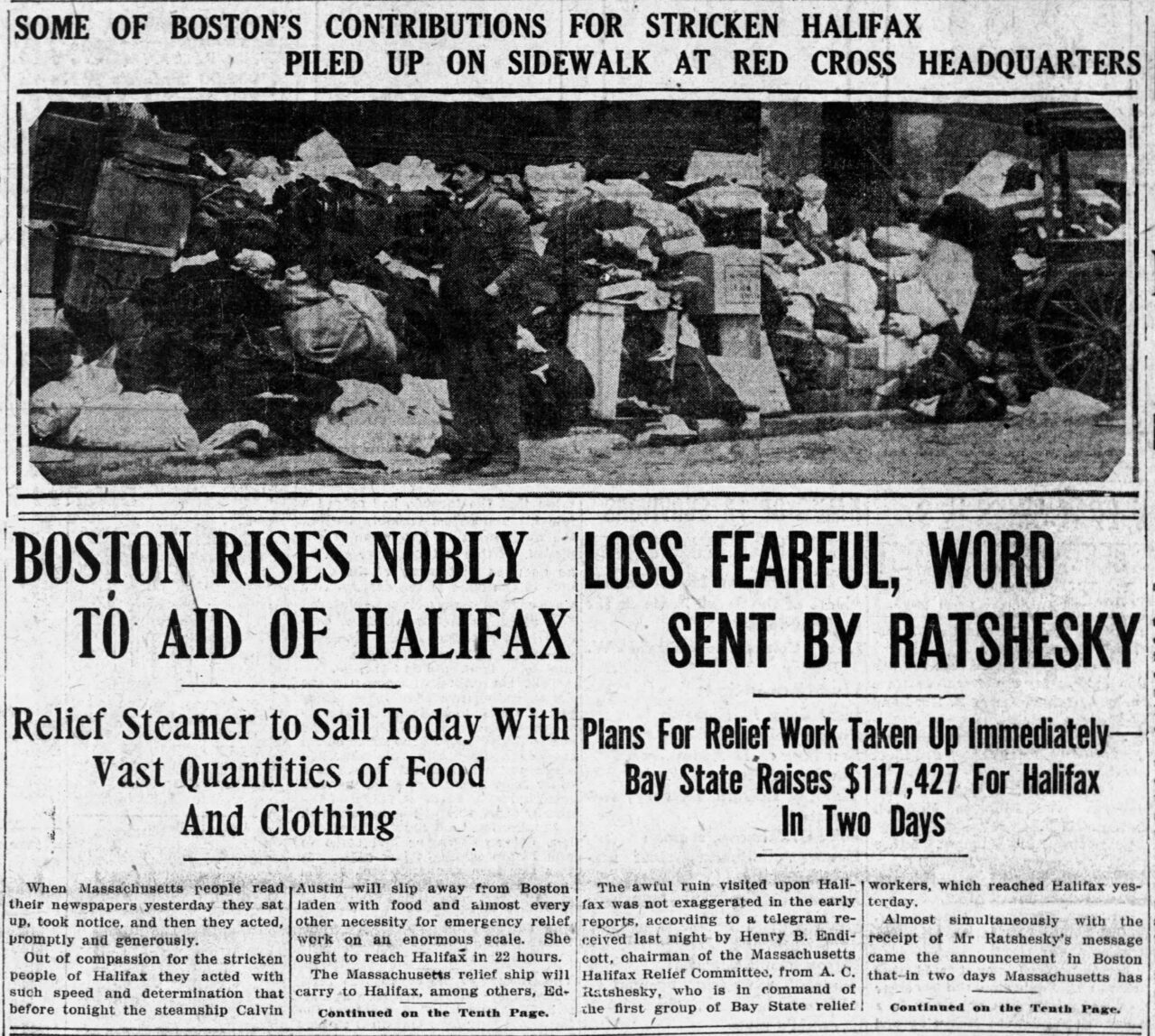
Once Halifax and Canadian authorities were established and ready to handle the ongoing medical needs, Ratshesky and his team headed back to Boston. The Halifax committee overseeing the effort sent their thanks to Boston and Massachusetts “for their overwhelming sympathy, most generous gifts of relief supplies, the sorely needed services of doctors and nurses and hospital units, and especially for the thought of accompanying said gifts with the services of A. C. Ratshesky, whose generous and expert advice have greatly helped to solve many of our problems, and whose sympathetic activity and tact will, we trust, soon assist us to bring comparative order out of the chaos…”
The Navy Calls
Seven years later, Ratshesky’s reputation drew the attention of the U.S. Navy as it prepared to launch a public fundraising campaign to save USS Constitution.
Yet again, Ratshesky brought his organizing and fundraising experience to the Save “Old Ironsides” Campaign, as well as a long list of affluent and powerful connections. Numerous prominent political and financial leaders joined the effort at Ratshesky’s behest, including Massachusetts Governor Alvan T. Fuller, who was tasked with enlisting the support of other state governors in developing similar state committees around the nation.
Ratshesky led the national committee’s decision to appeal for organizing support from the Benevolent and Protective Order of Elks, a national social and charitable club with 1,400 chapters and nearly a million members, thousands of whom had visited Constitution during an annual convention in Boston in July 1924. He continued to work behind the scenes on the campaign for the next five years, co-authoring a final report with his navy counterpart in 1930. The campaign’s national exposure cemented “Old Ironsides” in the minds of a new generation, who turned out in droves to visit the ship during its National Cruise after its restoration was complete.
Ratshesky’s Legacies
Immediately following the final report of the Save “Old Ironsides” Campaign, Ratshesky was appointed U.S. minister to Czechoslovakia, a position he held for the next two years. He died in Boston in 1943 at the age of 78.
Ratshesky’s legacy encompasses numerous government service positions, the founding of Beth Israel Hospital in Boston, and the creation of the A. C. Ratshesky Foundation, which continues its philanthropic work to this day. But at this time of year, he is remembered from Boston Common to the Charlestown Navy Yard for his vital role in aiding Halifax and saving USS Constitution.
The Author(s)
Carl Herzog
Public Historian, USS Constitution Museum
Carl Herzog is the Public Historian at the USS Constitution Museum.


