



Private Samuel Boynton was a typical Marine on board USS Constitution during the War of 1812.
Born around 1789 in Newburyport, Massachusetts, he was in his mid-20s when he enlisted as a Marine and joined the crew of USS Constitution in Boston in 1813. Like many of his fellow Marines, Boynton came from Essex County, a coastal fishing and farming region north of Boston. He worked as a laborer before enlisting. An ‘X’ mark on his enlistment paper suggests he was illiterate.
At his enlistment, Boynton was 5 feet, 7 inches tall with blue eyes, a fair complexion, and light brown hair. As a Marine private, Boynton was paid $6 a month to serve as part of the shipboard police force and as a seagoing soldier. The Marines followed the Army’s training protocols and standards but could also be called upon to assist in shiphandling on board. They were among the lowest paid positions on board.
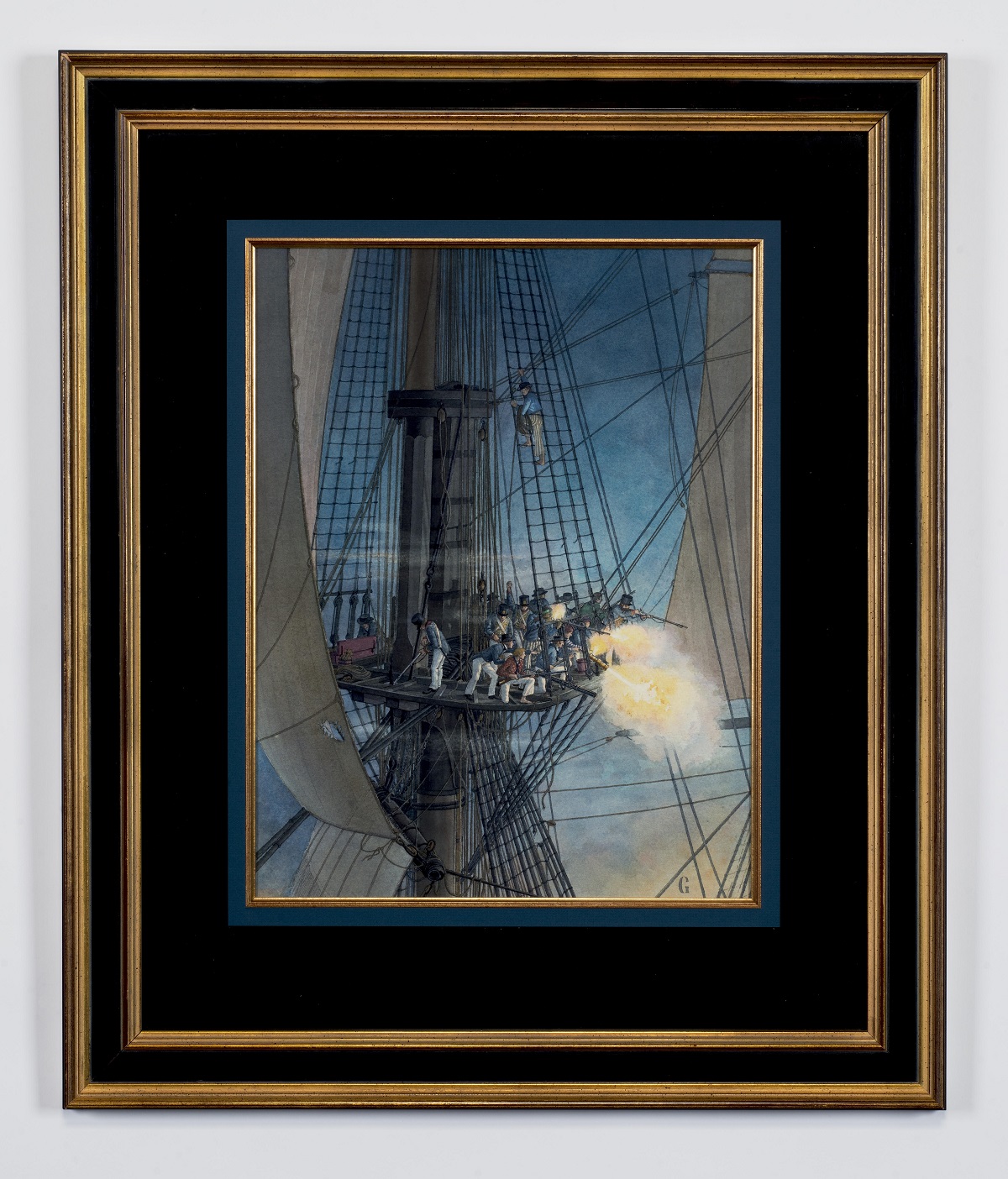
That Boynton’s profile and experience was statistically typical is borne out by the records kept of U.S. Marines when they enlisted. While enlistment records for seamen entering the Navy recorded little more than their declared name, Marines enlistment records were far more detailed, documenting their place of birth, age at enlistment, height in feet and inches, eye and hair color, complexion, and prior occupations. Much of this detail was designed to help track down deserters, a common phenomenon. In addition to information recorded upon enlistment, the documents were usually updated with remarks detailing the Marine’s career in the Corps.
These records for the Marines on USS Constitution, as well as other early U.S. Navy ships, were known as Marine Corps Size Rolls and are maintained at the National Archives and Records Administration. The Rolls provide a unique window into the identities of Marines like Samuel Boynton with oddly precise details that often don’t exist for the other members of Constitution’s crew. Taken together, the records also provide a demographic profile of the 109 Marines who served on USS Constitution during the War of 1812.
While Constitution’s Marines are similar in many ways, there are distinct differences in their backgrounds. Most were born in the United States, and, like Boynton, more of them came from Massachusetts than anywhere else. Most of them had previously worked as artisans, craftsmen, or in other trades, largely matching their origins in the cities of Boston, New York, and Philadelphia. Stagnating commerce in the lead up to the war resulted in economic hardship in the port cities. Many of the manufacturing and craft industries were struggling, leaving prospective Marine recruits out of work.
About 28 percent were recorded as having worked as “laborers,” an umbrella term for a variety of work spanning urban or rural areas. In Essex County, for example, Boynton may have worked on the waterfront docks in Newburyport or on a farm further inland.
Of the 25 Constitution Marines who were born in countries other than the United States, 18 came from Ireland. While this mirrored Boston’s broader demographics, it also underscored the Marines’ role as a refuge of last resort for those escaping hardship ashore. Unlike seamen, who came with specific skills, Marines were regarded as comparatively untrained and unskilled, occupying a low-paid position that lacked the prestige the U.S. Marine Corps would later attain as an independent branch of the armed forces. In addition, Marines occupied distinct social spaces and reported to a separate command structure from the rest of the ship’s crew. This deliberate arrangement kept them detached from the seamen they were tasked with policing and helped prevent mutiny.
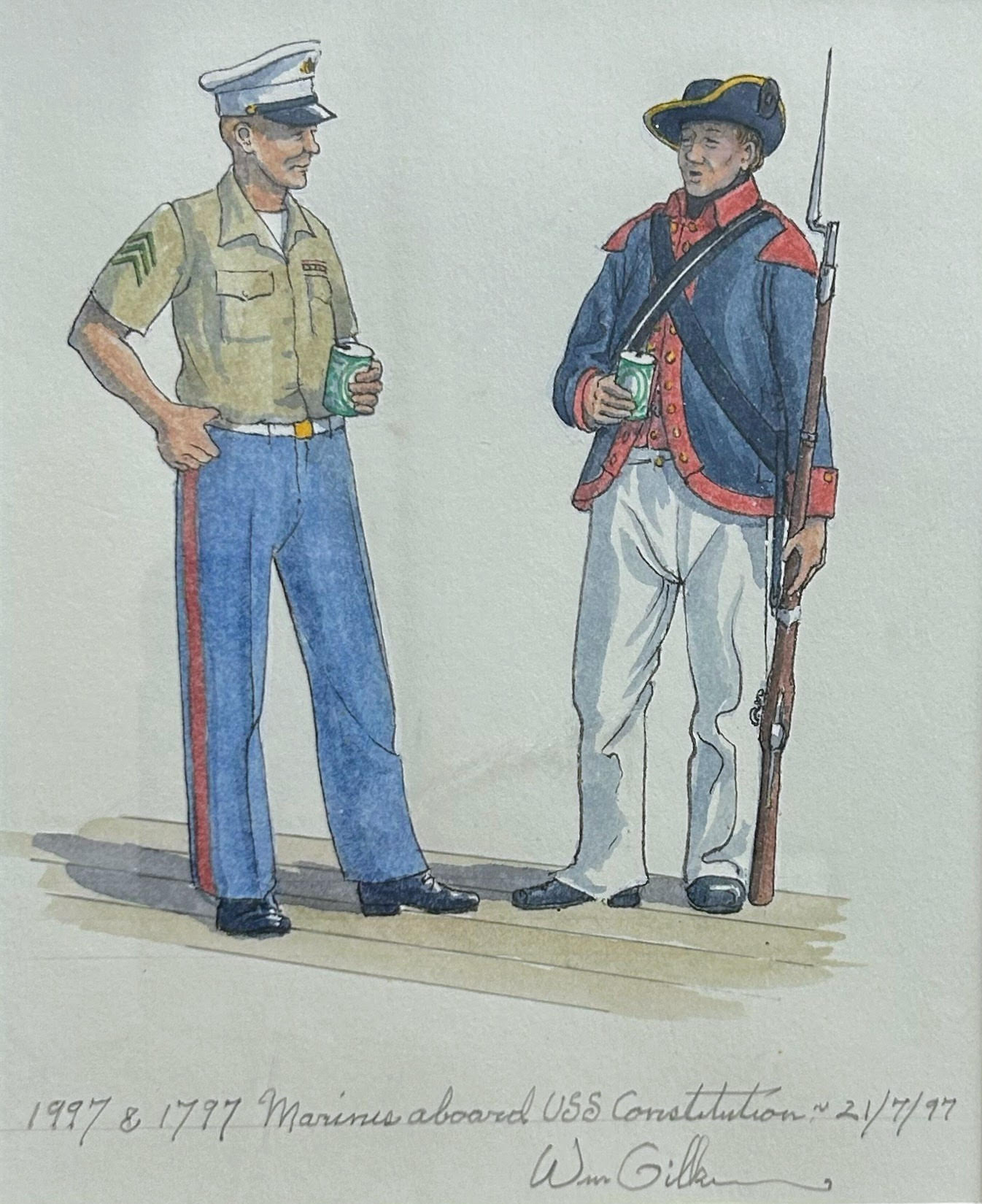
Few Marines reenlisted, making Boynton’s five years of service one of the unusual aspects of his career. His share of the prize money from the battle with Cyane and Levant dramatically increased his overall earnings.
Unlike many of Constitution’s Marines who were discharged in Boston or transferred to the Marine Barracks at the Boston Navy Yard, Boynton was discharged in New York from USS Congress. The rest of his life remains a mystery.
For more details on the makeup of the U.S. Marine Corps on board USS Constitution during the War of 1812, download the Museum’s publication: A Demographic Survey of USS Constitution’s Marine Detachment, 1812-1815.
The Author(s)
Carl Herzog
Public Historian, USS Constitution Museum
Carl Herzog is the Public Historian at the USS Constitution Museum.


