



![Martin in uniform [31-672-Martin]](https://ussconstitutionmuseum.org/wp-content/uploads/2026/05/Martin-In-Uniform.jpg)
In 1941, 11-year-old Tyrone Gabriel Martin created a drawing of USS Constitution in pencil and crayon on construction paper and told his mother he was going to join the Navy. That proved to be an understatement.
In 1974, having already served as a Navy officer for 22 years, Commander Martin took on the highest profile command of his career: USS Constitution. Over the next four years Martin was the face of “Old Ironsides” as the ship prepared for and participated in the massive Bicentennial celebrations of American independence. By the time he departed Constitution and retired from the Navy in 1978, Martin had emerged as the ship’s most influential commander of the modern era.
In the decades that followed, Martin also became the ship’s most prolific historian. He produced an exhaustive narrative history book, dozens of articles, and extensive research, much of which served as the foundation for the newly established USS Constitution Museum.
Commander Tyrone Martin, whose name became synonymous with the ship he sketched as a child, died in Tryon, North Carolina, on February 26, 2026, at age 95.
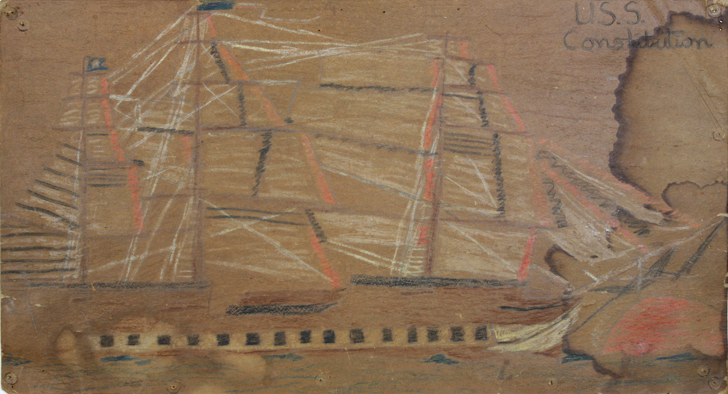
An Expansive Early Career
Martin was born in 1930 in Greenwich, Connecticut. His family lived on the estate belonging to the Gimbel family of department store fame, where his father worked as the estate manager. He attended the University of Rochester, majoring in English and participating in its Navy Reserve Officer Training Corps program. Through the program, he was commissioned in the Navy as a lieutenant junior grade in 1952. In 1957, he married Mary Meadow of Elberton, Georgia. They remained together until her death in 2007.
Martin’s first Navy assignment was on a radar picket destroyer in the Korean War, immediately followed by two other seagoing deployments in Asia, and three deployments to the Mediterranean. He attended the Naval Intelligence School and served two separate tours in the Office of Naval Intelligence (ONI). He had several additional commands and was chief staff officer of an amphibious squadron in the Pacific fleet.
Commanding Constitution
On August 6, 1974, Martin took command of USS Constitution as the ship was entering the second phase of a multi-year restoration in preparation for the American Bicentennial.
For the next four years, he served as the primary advocate and public face for USS Constitution during one of the most highly publicized periods of its modern history. Throughout the restoration, Martin made recommendations that helped shape the ship’s long-term preservation. As Constitution gained national attention through numerous public events, he reenvisioned the public’s interactions with the ship and its crew. His vision continues to resonate today.
Preserving the Ship
Finding that no one involved in the restoration project had specialized knowledge of the ship, Martin began his own research into details of the ship’s historical appearance and operation. He recommended to the Chief of Naval Operations (CNO) that the ship’s historically accurate War of 1812 appearance should be the basis for the restoration and provided input on how future restorations should proceed. His recommendations became Navy policy and still guide the restoration and repair work today.
Martin also lobbied to strip Constitution of its official numerical designation at the time, “IX-21”, which had been assigned to the ship in 1941 as part of a larger fleet numbering plan. “IX” stood for “Unclassified Miscellaneous” vessels, and “21” was simply the next available number in the class when Constitution was recommissioned. Martin argued that Constitution’s unique status and historical significance made the number unnecessary. Secretary of the Navy J. William Middendorf agreed, and the designation was dropped. Today, USS Constitution is the only U.S. Navy ship without a number.
A Royal Welcome
In 1976, Martin ordered two of the ship’s replica 24-pound long guns modified to fire saluting charges in preparation for Queen Elizabeth II’s visit in July. When the Royal Yacht Britannia docked next to USS Constitution in the Charlestown Navy Yard on July 11, Martin welcomed the Queen and Prince Philip on board. It is the only time a sitting British monarch has ever stepped foot on Constitution’s decks. Today, two of the ship’s guns still fire salutes twice daily at the beginning and end of the day, as well as during the ship’s underway demonstrations on Boston Harbor.
Leading the Crew
While the crew had worn some semblance of period uniforms beginning in the 1950s, Martin researched and guided the creation of more historically accurate uniforms, including one for himself as captain. The crew’s period uniforms continue to be refined today as new historical research and information come to light.
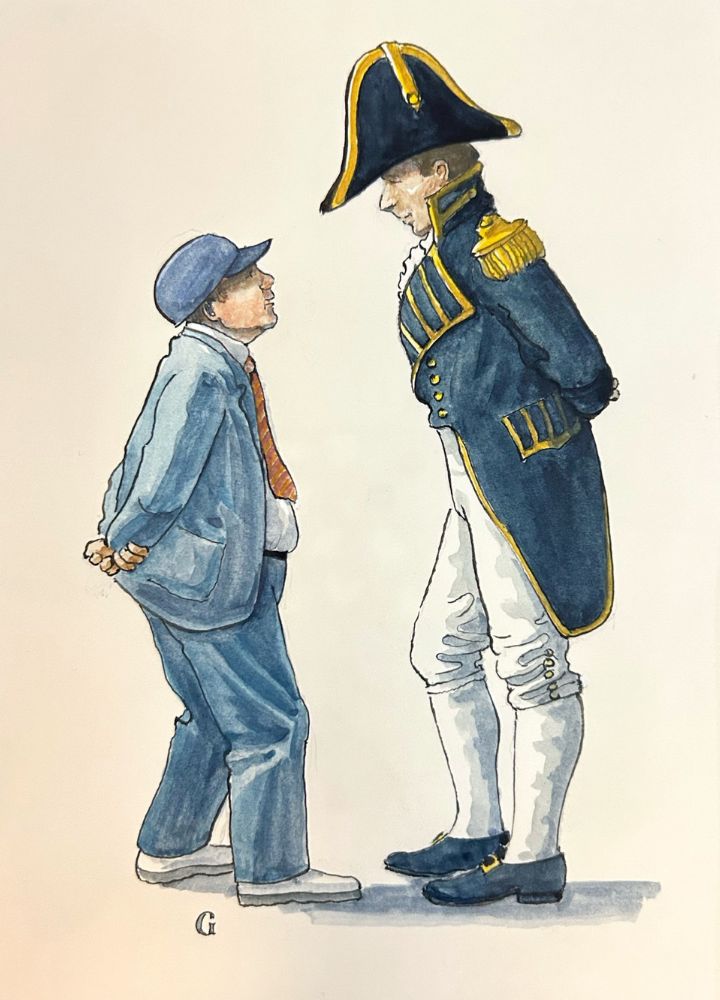
To ensure the crew could accurately share the history of USS Constitution with visitors, Martin encouraged the Bureau of Naval Personnel to establish qualification standards for sailors assigned to the ship. That tradition continues today, as sailors serving aboard Constitution are required to pass both basic and advanced history examinations.
In recognition of the ship’s contributions during the American Bicentennial, Constitution received its first-ever unit commendation. Upon departing Constitution and retiring in 1978, Martin became the ship’s first captain since Charles Stewart in 1815 to be decorated for his command tour.
History Continues
Martin’s work accelerated after his retirement from the Navy, and his research into the ship’s history became even more extensive and detailed. Within two years of retiring, he published A Most Fortunate Ship, a comprehensive narrative history of Constitution based on the ship’s daily records and the experiences of its crew from launch to the present day.
From his research into the ship’s crew, gleaned from muster rolls, logbooks, and personal journals, Martin produced a database of individual crew members that detailed their service records and biographical information. That database is now managed by the USS Constitution Museum and encompasses over 15,000 crew member records from 1798 to today. Ongoing research continues to reveal new details about the lives of individual sailors, which help uncover broader patterns of naval service aboard the ship across different periods of its history.
In the following decades, Martin published five additional works on Constitution, as well as a long-running column in Naval History magazine. In 1998, Martin converted much of his research into a website called The Captain’s Clerk, which is preserved in the Library of Congress’ electronic archives and remains accessible via the USS Constitution Museum’s website. Through his final years, Martin continued to serve as a resource on historical knowledge about Constitution and transferred his life’s work of research and personal papers to the USS Constitution Museum.
Martin’s final four-year command in the U.S. Navy became a commitment that he carried through the rest of his life. Today, the legacy of that work continues to shape Constitution’s story as well as the experiences of hundreds of thousands of visitors annually to both the ship and the USS Constitution Museum.
[Featured image courtesy of the U.S. Navy.]
The Author(s)
Carl Herzog
Public Historian, USS Constitution Museum
Carl Herzog is the Public Historian at the USS Constitution Museum.


