



USS Constitution was launched in October 1797, but before the ship could go anywhere, it needed a crew. Recruiting hundreds of sailors for a brand-new naval warship was a daunting proposition. Between outfitting the ship and finding enough men to crew it, more than eight months passed before Constitution was finally ready to sail on July 22, 1798. Even then, compared with the complement it would carry on later deployments, Constitution was undermanned on its first deployment into the Atlantic.
Forming a Crew
The ship’s first captain, Samuel Nicholson, struggled to find sailors. He continued to recruit during the first deployment, including while at port in Norfolk, Virginia, following the ship’s first capture on September 8. After setting sail about three weeks later, Nicholson headed south, but extensive problems with the rigging, including a badly cracked bowsprit, forced him to return to Boston by early November. As the ship was rerigged, additional men were recruited. On December 29, 1798, the ship departed Boston once again, this time bound for the Caribbean.
The prospective crew members and officers who showed up to join the ship’s company on these earliest assignments were a mixed lot of regional mariners, a few older former members of the Continental Navy, and others for whom naval service represented an escape from other circumstances or an opportunity to put specific skills to use. Through the muster rolls and payroll records, the USS Constitution Museum has identified about 380 crew who served under Nicholson on Constitution’s earliest assignment. Here are some of their stories.
A French Midshipman
Eighteen-year-old Louis Alexis Le Bas de Courmont became a midshipman in the U.S. Navy in July 1798 and joined USS Constitution’s crew in April 1799 when the ship arrived at Martinique. Le Bas de Courmont was a family name that indicated a legacy of landed nobility, but in the U.S. Navy, he was known simply as Louis Alexis. Although Alexis was a French national, he appears to have been displaced by the French Revolution and likely proved valuable to the U.S. Navy as it pursued French privateers throughout the Caribbean.
Alexis was born in Aisne, France, to Joseph Moquet and Marie Louise Ursule Dubois. His family’s land ownership and noble connections may have caused problems for them during the volatile years of the French Revolution. Pursuing life and work in the United States was a potentially safe alternative for Louis. However, it became a long career that outlasted the politics of France.
He remained on USS Constitution until 1801, served on USS Congress in 1804, and was promoted to lieutenant in 1807. During the War of 1812, Alexis served in the Gulf Coast, supporting an expedition to unseat French pirates on Barataria, then commanding the New Orleans arsenal, securing and providing munitions to Navy ships throughout the region.
In 1827, he resigned from the Navy. His father was ill in Paris, and Alexis, having already requested extended furloughs to visit his family, returned to France permanently along with his wife, Aimee Adelaide Olivier. He died in Paris in 1860.
First Surgeons
USS Constitution’s first naval surgeon was William Reed, who joined the ship in March 1798. Unfortunately, Reed succumbed to yellow fever on Constitution’s first voyage and died in late September while the ship was still in Norfolk. He was the second crew member to die while serving on Constitution.
Under pressure to depart Norfolk, Nicholson accepted the immediate volunteer assistance of John Minson Galt, a seemingly unlikely candidate for surgeon in the new Navy.
Galt served as the attending physician at Williamsburg’s Public Hospital for Persons of Insane and Disordered Minds. Headed by his brother James, the hospital was the nation’s first in-patient center specifically dedicated to treating mental illnesses. Born in Williamsburg in 1744, John attended the College of William & Mary and then studied medicine in London, Edinburgh, and Paris before returning to the Chesapeake. He served as a military surgeon during the American Revolution, including during the siege of Yorktown, and was the senior field surgeon in Virginia.
It’s unclear what motivated John Galt to volunteer as surgeon on Constitution. Though continuing to provide military medical service in the years following the American Revolution, he was 55 years old at the time and held a part-time position at Williamsburg’s Public Hospital. This arrangement may have allowed him to temporarily serve aboard Constitution and still return to the hospital, an institution with which his family was deeply involved. Galt remained aboard only until November, when the ship returned to Boston.
There, Nicholson found a new surgeon, Peter St. Medard. Born in 1755 on the Ile d’Oléron, off the west coast of France, Pierre St. Medard was the son of a merchant and nephew of French naval surgeons. Medard became a surgeon in the French merchant marine and was captured by the Royal Navy during the American Revolution. First held prisoner in New York, he was released from captivity to Boston, where he joined the Continental Navy as a surgeon. After the war, he established his own private practice in Boston.
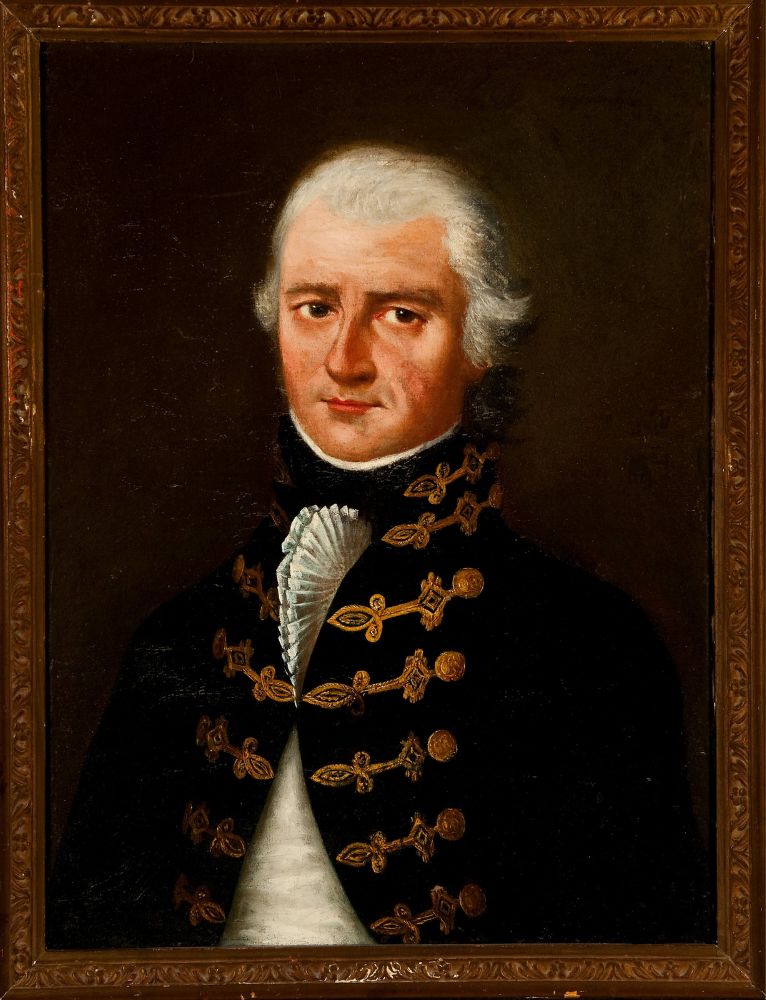
Medard remained on USS Constitution until 1801, serving under both Nicholson and Silas Talbot in the Caribbean during the Quasi-War with France. He returned to the Navy the next year, serving as surgeon for the frigate New York in the Mediterranean as part of a squadron along the coast of North Africa defending American merchant ships from attack. After the Barbary War, Medard returned to private practice in Boston, where he died in 1822.
The USS Constitution Museum continues to uncover and research the stories of Constitution’s first crew, as well as the thousands of men and women who have served aboard the ship during its nearly 230 years of active service since it first sailed from Boston in 1798.
The Author(s)
Carl Herzog
Public Historian, USS Constitution Museum
Carl Herzog is the Public Historian at the USS Constitution Museum.


