


On September 8, 1798, USS Constitution captured a perceived French privateer off the coast of South Carolina. Over the course of the next 56 years, “Old Ironsides” seized or captured 33 vessels of numerous nationalities in a variety of conflicts and locations. The last was an American slave-trading schooner, taken off the coast of west Africa on November 3, 1853.
The diversity of vessels and the circumstances under which they were taken point to the variety of global conflicts Constitution participated in, as well as the complex array of missions the ship was assigned over its long career.
Five of the ships were British warships captured during the War of 1812. The other 28 ships were either enemy privateers, enemy merchant ships, American merchants that were recaptured from the enemy, or American ships seized for illegal activity.
The statistics point to the central role that controlling merchant shipping played both in wartime and in peace. Sixteen of the ships were either enemy merchants or American merchants violating trade restrictions, including trading with the enemy. Eight were American or allied merchant ships that had been taken as prizes and were recaptured. Four were privateers, privately owned ships contracted by governments to capture shipping.
But the complex relationships between merchants, nation-states, and privateers led Constitution to several encounters in which the seizure or capture itself proved illegal. Every vessel taken had to be adjudicated by a court to affirm its legality, then either sold or a prize value assigned. Although some enemy captures were burned on site, most ships with either significant value or a more complicated legal status were returned to port where a court determined if the action had been legal. If not, the vessels were returned to their owners, and occasionally reparations were made.
Two Mistakes
The potential complexities led Constitution’s first captain, Samuel Nicholson, to fundamentally misunderstand the situations and make the wrong decisions in Constitution’s first two encounters.
Deployed to the U.S. Atlantic coast shortly after being launched, Constitution’s first assignment was to protect U.S. shipping from French privateers in a conflict that later became known as the Quasi-War with France. The Republic of France had opposed American efforts to assert neutrality in the conflict between France and Britain and had sent privateers to take U.S. merchants in the Caribbean and along the U.S. coast.
Nicholson was convinced he had found a French privateer when Constitution encountered Niger off the coast of South Carolina in 1798. The 24-gun ship had a French royalist captain who was unable to produce papers but claimed he had been working in the British service for five years. Though it had a primarily French crew, there were too few to effectively man the ship as a privateer. On board were a Philadelphia merchant’s cargo, a Baltimore gentleman, and several Englishmen.
Despite the presence of friendly merchants and cargo, Nicholson seized the ship. Rather than assigning a prize crew to Niger, he abandoned Constitution’s station off the coast and returned with the prize to Hampton Roads, staying there for a month while the court sorted it out. Recognizing the vessel was working for British as well as American interests, the court ordered the ship returned to its owners and levied $11,000 in compensation, forcing the U.S. government to appropriate funds to cover the judgment.
Three months later, Nicholson encountered Spencer, a British merchant vessel that had been captured as a prize by the French frigate L’Insurgente. Initially, Nicholson chose to seize the vessel and put aboard a prize crew. But undoubtedly affected by the outcome of his first capture, Nicholson had second thoughts about whether he was allowed to take what had originally been a British vessel. Twelve hours after capturing Spencer, Nicholson pulled his crew and gave the vessel back to the French prize crew. Both American and British merchants were furious when they found out.
Neutral Waters
Four of Constitution’s most dramatic captures occurred over a four-day period in and around the harbor of Puerta Plata on the north coast of Hispaniola in May 1800. In a series of dramatic events, Constitution took two French privateers, recovered a previously captured American vessel, and seized another American for trading with the French.
Capturing the more notorious of the French privateers involved Constitution crew and Marines sneaking into the harbor. In their first amphibious landing as part of the new navy, Marines in small boats charged up a hill and spiked the guns of the fort overlooking the harbor, while Constitution sailors in one of the other captured merchant ships assaulted the privateer at anchor.
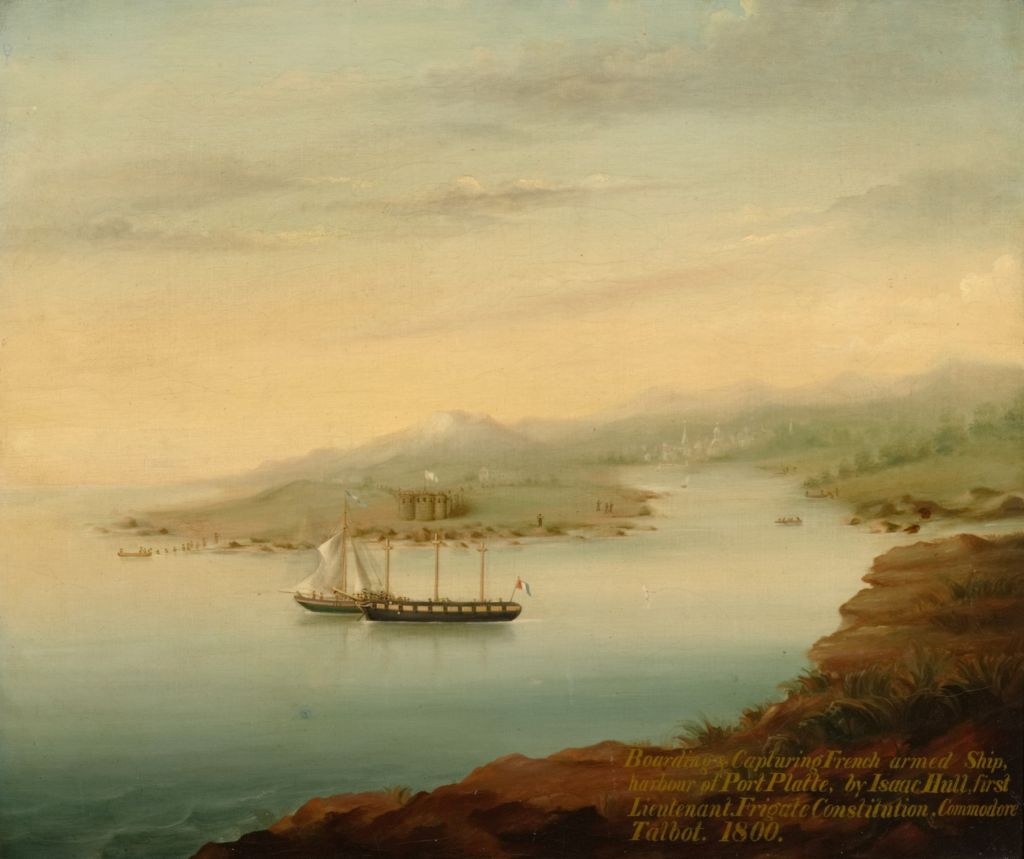
The operation was stunning success, but for one technical issue: Puerta Plata was still considered a neutral Spanish territory, and consequently French ships could not be attacked in its Spanish waters. In a previous treaty, Spain had ceded the eastern half of Hispaniola to France, but the island was still occupied and ruled by the Spanish, who protested the invasion of their harbor to the U.S. government. Not waiting for a court judgment, American diplomats quickly returned the French privateer to the Spanish government.
At War
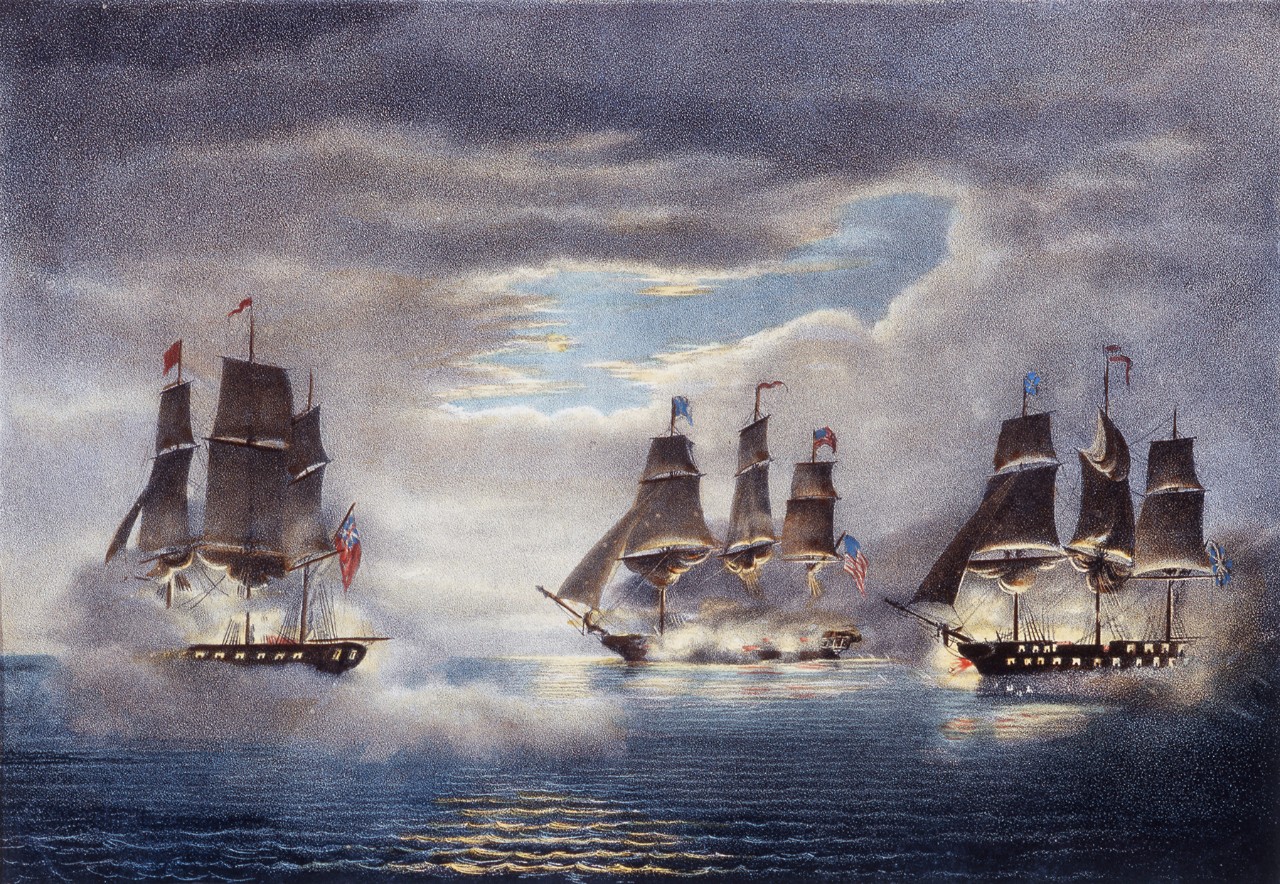
The naval clashes that earned Constitution its fame and reputation occurred in the War of 1812, when the ship confronted comparable sized and armed enemy ships for the first time.
At the opening of the war, Constitution captured HMS Guerriere and HMS Java in bitter battles, but in each case, the British ships were too badly damaged to be returned as prizes to a U.S. port. In a third famous battle at the end of the war, Constitution captured two smaller frigates in a single battle. HMS Levant was retaken by the British shortly after the battle, but HMS Cyane returned to the United States and was placed into service in the U.S. Navy.
Constitution’s fifth Royal Navy capture was a 14-gun schooner, HMS Pictou, which sustained heavy damage to its deck and rigging as it attempted to flee from Constitution’s guns. Badly damaged, it was unable to be brought back to port and was scuttled.
Constitution had two other encounters with the Royal Navy during the war, but both involved enemy squadrons of overwhelming power, from which Constitution’s captains prudently fled.
Burned
Constitution made nine additional captures during the War of 1812, seven of which were British merchant ships. All but one of these were considered too inconsequential to allocate a prize crew to returning to the United States, so the ships were burned after their crews were taken off. Susannah, the one ship they kept, was carrying a highly valuable cargo of animal hides and tallow, as well as two live jaguars, from Buenos Aires to Liverpool. The jaguars were moved onto Constitution before Susannah was sent under prize crew to the United States.
Periods of Peace
Constitution’s final capture, the American slave trader H.N. Gambrill, occurred 38 years after the battle with Cyane and Levant, as part of a squadron blocking the illegal slave trade off the coast of west Africa. In the interim period, Constitution had served on a variety of internationally based squadrons, representing American interests around the globe but never having to take another ship. After its service in the Africa Squadron, Constitution continued to actively sail as a training ship but never faced another hostile encounter.
A detailed list of the vessels Constitution captured or seized, their circumstances, and dispositions is available for download here.
The Author(s)
Carl Herzog
Public Historian, USS Constitution Museum
Carl Herzog is the Public Historian at the USS Constitution Museum.


